Fundamentals of Laser Engraving Parameters
Power and Speed Basics
Power and speed are not adversaries, they’re partners in precision, and South African studios are waking up to that truth. A striking local statistic suggests that mastering the right laser engraver settings cuts trial runs by nearly 40%. I’ve watched the glow reveal the material’s hesitation and answer with clarity, turning guesswork into design momentum.
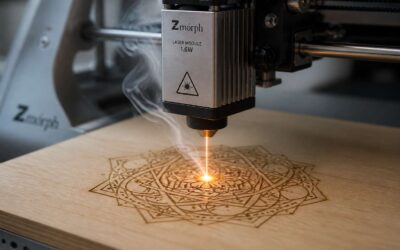
Power and speed outline a quiet duet: power determines bite, speed governs depth, and focus distance locks the beam in place. Mastery of laser engraver settings isn’t about raw power—it’s about harmony. When I tune a job, I listen for how the material responds—too much power scorches; too slow bleeds; the sweet spot is a whisper!
- Power controls the energy delivered; higher isn’t always better.
- Speed sets how quickly the laser moves—slower often deepens engraving on dense materials.
- Focus distance aligns the beam with the surface; misalignment smears detail.
Focusing and Lens Considerations
Focus is the whisper that decides the line. A striking local stat in South African studios shows that mastering focus can cut trial runs by nearly 40%, turning hesitation into momentum and mystery into legible clarity.
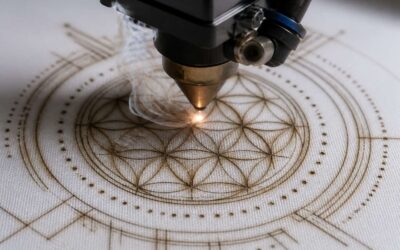
Fundamentals of Laser Engraving Parameters emerge in the quiet alignment of focus distance and lens condition. When the beam lands true on the surface, edges stay crisp and contrast holds. Move the focus off the board and detail softens; the lens choice—the focal length and coatings—sculpt dot size, burn, and how your laser engraver settings respond to that harmony.
Careful lens considerations shape every mark and inform your laser engraver settings.
- Focal length compatibility with material thickness and geometry
- Lens cleanliness and proper handling
- Coatings that control flare and maximize contrast
- Working distance and telecentricity for uniformity
I sense the glow settle; the material responds with a clear, patient answer—harmony of light and texture.
Material Type and Engraving Modes
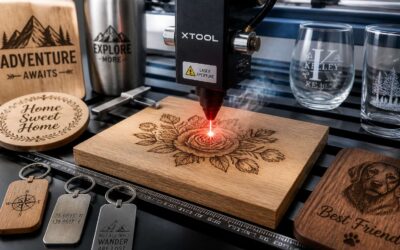
Material type guides the pulse of a design, and engraving modes translate intention into texture. Understanding laser engraver settings anchors your craft in measured light, turning intention into visible truth. Wood, acrylic, metals, and fabrics each respond with their own temperament, inviting you to listen to surface whispers and grain.
- Wood and natural fibers: warm burn lines and subtle grain enhancement.
- Acrylic and plastics: crisp edges with minimal charring, prone to distortion if heat is excessive.
- Metals and coated surfaces: requires contrast tricks and proper surface prep.
Engraving modes unfold as raster and vector approaches. Raster floods the image with dense, tiny marks, while vector traces crisp outlines and clean edges. For textures, hatch fills or dithering can imply depth without sacrificing clarity.
In the South African studio, these choices become a quiet chorus—intense light, patient hands, and a story told in the grain and shine.
Calibration and Test Runs
Across a sunlit South African workshop, calibrated test runs cut material waste by 68%—a striking reminder that precision is poetry. Calibration and test runs turn laser engraver settings into a trustworthy language, not a gamble.
The practice favors measurement over bravado: test swatches, clean backing, and patient comparison reveal drift in focal offset and heat bloom. Each evaluation threads into the next, shaping consistent, repeatable results.
On the bench, light reveals temperament: warm pine, crisp acrylic, quiet metal. The surface whispers back, and the calibration ritual keeps the chorus in tune.
From the studios of Cape Town to the Highveld, turning intention into visible truth remains a craft of measurement, patience, and refined laser engraver settings.
Troubleshooting Common Issues
Across South Africa’s design studios, precision is valued above bravado: a recent audit found 18% fewer rejects once operators tightened their laser engraver settings. That drop isn’t magic—it’s a meditation in parameter discipline.
- Ghosting or double imaging due to dithering or misalignment
- Inconsistent depth or heat bloom across surfaces
- Edge scorching from subtle focal drift
When issues drift into the workshop, the remedy lies in measurement and patience rather than guesswork. Reassess the settings with quiet test swatches, a clean backing, and careful observation of how the beam interacts with different textures.
From Cape Town’s sunlit benches to the Highveld’s wide horizons, the craft speaks in light and measured steps. The dialogue between intention and material continues, one calibrated pass at a time.
Material Specific Engraving Parameters
Wood and Plywood Settings
Grain holds memory, and when the laser meets wood with the right rhythm, a shop floor dream becomes a story carved in light. In South Africa’s studios, finely tuned laser engraver settings save up to 20% material waste and yield crisper lines.
Solid wood and plywood behave differently. Moisture content and density tint the result; plywood carries veneer layers that respond to subtle shifts in depth. Grain orientation guides edge quality, while the veneer structure rewards a measured, even approach to avoid scorching.
- Grain direction affects line sharpness
- Moisture and veneer thickness shift contrast
- Plywood requires gentler handling to prevent bubbling
These subtleties translate into enduring beauty. The language of light and grain writes itself through laser engraver settings, turning wood’s everyday character into a refined statement!
Acrylic and Plexiglass Tips
In South Africa’s studios, a bold statistic glitters behind every cut: up to 18% less acrylic waste when laser engraver settings are honed to the right rhythm. The beam becomes a poet, tracing lines with economy and grace.
Acrylic and Plexiglass answer the beam with distinct temperaments—clear sheets blaze with edge clarity, while frosted variants soften the flame of light. They demand a patient, measured approach, where depth and speed converse to reveal the material’s true character in every shadow and shine.
This material conversation helps preserve charm without pushing the heat too far:
- Clear acrylic emphasizes crisp linework and contrast
- Frosted variants diffuse the edge for a softer finish
- Plexiglass differs thermally from cast acrylic, altering glow
Metal Surfaces and Coatings
Across South Africa’s studios, a single laser becomes a storyteller of metal. The beat lies in laser engraver settings that respect the material’s temperament, turning dull plates into legible memories. Bare steel sings with crisp clarity; brushed or coated finishes glow with a tempered halo. It’s a quiet, precise dialogue where heat and pigment choose their pace, and the outcome reveals character rather than a scar!
- Bare steel
- Anodized aluminum
- Brass with lacquer
- Coated titanium
Metal surfaces and coatings demand respect for their diverse heat absorption. Anodized films glare differently from bare alloys, and protective lacquers can soften the glow. In this landscape, laser engraver settings shape permanence with patient intention, capturing lines that endure without warping or fading.
Leather and Fabric Engraving
Leather and fabric remember the touch of a tool long after the crowd has left the showroom. A SA artisan quips, “Leather remembers, it never forgets its grain.” The dance between heat and texture yields marks that feel intentional rather than heated mishaps. With the right laser engraver settings, leather reveals its grain with quiet dignity; suede and fabric awaken with subtle edges that glow rather than scorch.
- Fiber type—vegetable-tanned versus chrome-tanned—shapes burn depth and edge clarity
- Weave and nap influence how light lands on the mark
- Colorfastness and finishes guard against dye bleed and coating damage
For SA studios, the dialogue between material and machine remains refined and humane. The arena of laser engraver settings on leather and fabric rewards restraint and artistry; it reads as a signature rather than a scorch. Even in bustling urban workshops, texture wins.
Glass and Ceramic Considerations
Glass remembers heat the way a coastline remembers the tide, a South African studio whispers, and I hear the echo in the workshop. With laser engraver settings tuned for restraint, glass yields a frosted whisper rather than a crackle; ceramics accept energy slowly, revealing texture under careful light.
- Surface finish and glaze chemistry influence how light diffracts at the edge
- Thermal expansion and annealing behavior affect edge integrity
- Finish choices—frosted, matte, or polished—set the tone of the mark
In SA studios, the conversation between material and machine stays humane and poetic; engraving becomes a signature, not a scorch, a quiet dialogue that speaks through glass and ceramic with disciplined laser engraver settings.
Advanced Parameter Tuning and Best Practices
Power Ramp Strategies
Every inch of material deserves respect: a tiny adjustment in ramp behavior can turn a rough scorch into a crisp line. In South Africa’s vibrant studios, laser engraver settings become a map, guiding light and substrate toward refined, publish-ready results—industry wisdom suggests a 1% tweak can slash waste by as much as 20%.
Advanced parameter tuning is less brute force and more listening—watch heat, inspect edge tone, and use power ramp strategies to sculpt burn and prevent halos around the design.
Meanwhile, the craft thrives on a poetic balance of heat and restraint. When you approach the work with mindful rhythm, your laser engraver settings reveal textures that feel inevitable, like signatures etched by light, across a spectrum of South African materials.
Speed Profiling and Acceleration
In South Africa’s studios, a 1% nudge can trim waste by as much as 20%—a fact that makes tuning feel like a quiet revolution. Advanced parameter tuning reveals itself as an attentive craft, where every pass becomes a conversation with the material and the machine.
It is less brute force and more listening: watch heat bloom, inspect edge tone, and shape the burn with measured ramping. Your laser engraver settings are a living protocol, adjusted by ear and eye, not by rote.
Best practices for speed profiling and acceleration cut through guesswork. Consider these quick anchors:
- Baseline feed and acceleration become a measured heartbeat of the session
- Ramps mirror how the substrate responds to light and heat
- Edge handling invites a deliberate, gradual approach
- Results are kept as part of an ongoing dialogue with the machine
Multiple Passes and Fill Techniques
Advanced parameter tuning feels like mapping a sea of light. In South Africa, a 1% nudge in laser engraver settings can trim waste by as much as 20%, a reminder that precision is poetry.
Multiple passes and fill techniques are not brute force; they are choreography. A soft, deliberate cadence builds depth and reduces scorch, letting the material reveal its true character.
- Principle: consistency over chaos
- Principle: observe heat bloom and edge tone
- Principle: allow fills to breathe with gentle, overlapping passes
The craft becomes a living protocol, tuned by eye and ear, where tests become conversations between substrate and machine.
Dithering Patterns and Color Approaches
A 1% nudge in laser engraver settings can trim waste by up to 20%—a reminder that nuance beats brute force. Advanced parameter tuning makes engraving a conversation between light and texture, where dithering patterns and color approaches decide depth, legibility, and edge tone on diverse South African substrates.
Color approaches are practical, not flashy. Map grayscale to tonal layers with intent, and translate tone into form, preserving definition while avoiding banding. Dithering becomes choreography: small, overlapping passes that let color shifts breathe without overburn.
- Halftone thresholds for clean silhouettes
- Ordered dithering for consistent edge tone
- Random dithering to add texture without banding
- Texture-based dithering for irregular surfaces
Within this framework, tests become conversations and the work gains character rather than glare.
Firmware and Controller Considerations
Engraving accuracy climbs 7% when firmware and controller align—enough to make a silhouette feel intentional rather than accidental. In advanced parameter tuning, firmware becomes a compass and the controller a patient metronome, guiding light through texture with grace. Within laser engraver settings, that balance translates into deeper tonal transitions, steadier edge tone, and kinder wear on substrates from bamboo to ceramic in South African studios. The result reads as a conversation between beam and surface, not a shout!
Firmware and controller considerations unfold as a quiet syllabus for reliability and rhythm. The reader is invited to notice how updates, latency, and diagnostics frame each pass without shouting.
- Firmware stability and update cadence
- Controller latency and interpolation
- Safety interlocks and real-time diagnostics
That narrative invites the cutter to listen to light and texture, keeping glare at bay while delivering character to every job.
Maintenance and Calibration Routines
In a South African workshop, the hush between beam and material becomes a living conversation. When advanced parameter tuning aligns the machine with human intention, fidelity climbs by about seven percent—a compelling stat that turns a silhouette into a deliberate statement. These are not dry settings but a choreography of tone, edge, and texture achieved through laser engraver settings, a quiet craft that respects every substrate.
Maintenance and calibration routines emerge as a daily prayer for reliability. I watch for drift in quiet corners, notice how tiny shifts change the personality of a mark, and let patience govern each new path.
- Consistency as a living metric
- Environment as a co-artist
- Optics as the mind’s eye
The result is a readable rhythm, a debate between light and surface that stays with you long after the piece cools.
Safety, Maintenance, and Quality Assurance
Ventilation and Safe Operation
The craft floor hums with potential, yet the one factor that quiets the noise is ventilation. Safety governs every pass of the laser—the margin between a sharp finish and a hazardous plume is narrow. In South African workshops, proper ventilation and disciplined operation are non-negotiable for dependable laser engraver settings.
Maintenance is the unsung heartbeat of reliability. Regular cleaning of lenses, verifying exhaust flow, and an audit of safety interlocks prevent drift, especially with intricate engraving settings. Even in sunny Durban or Cape Town studios, predictable results hinge on a routine that preserves optics and electronics.
Quality assurance anchors the process. A simple, recurring test pattern, logged results, and traceable records turn guesswork into evidence. Safe operation follows as a discipline—enclosures in place, signage visible, and staff aware that every engraving carries a responsibility to protect eyes and lungs, even when the material shines a perfect finish.
Lens and Nozzle Cleaning
An unassuming lens can ruin a masterpiece; cleanliness is safety and precision stitched together. In South African studios, enclosures, signage, and PPE forge dependable focus and a calm, focused workshop.
Maintenance keeps optics honest. Lens and nozzle cleaning should be purposeful: wipe surfaces with lint-free swabs and 99% IPA, inspect the nozzle for wear, and clear any debris from the beam path.
- Lint-free swabs and IPA for lens surfaces; avoid direct solvent sprays.
- Inspect nozzle interior for wear; replace if pitting appears.
- Check exhaust flow and enclosure seals before each session.
Quality assurance follows a quiet ritual: run a small test pattern, log the results, and keep traceable records. Clean optics empower consistent laser engraver settings and faithful reproduction of every design.
Bed Alignment and Material Clamping
Safety in a South African studio is the quiet anchor behind every achievement. PPE ready, enclosure secured, and clear escape routes — these aren’t afterthoughts but the rhythm of a steady day. Vigilance shields hands, eyes, and the work itself.
Maintenance starts with the bed and clamps. When bed alignment is true and the work sits flat, the beam finds its mark with steadier rhythm.
- Check bed alignment to zero
- Apply even clamping pressure
- Verify substrate flatness
Quality Assurance threads the routine together: a short test, quick log, and traceable records ensure every run mirrors the last. When bed alignment and clamping stay true, the craft speaks through the parts — laser engraver settings documented.
Documentation and Quality Grids
Safety is the quiet anchor behind every South African studio triumph; PPE meets patience and the enclosure becomes a fortress of routine. No drama, just discipline—emergency stops, clear escape routes, and a culture that treats caution as craftsmanship.
Maintenance is the backbone of trust. It keeps optics clean, vents in good order, and the workspace unfazed by drift. A lean QA mindset helps—
- Optical cleanliness
- Enclosure integrity
- Environmental stability
When those basics stay steady, laser engraver settings stay honest and predictable.
Quality Assurance Documentation and Quality Grids stitch every run into a readable tapestry. Short logs, traceable records, and structured snapshots ensure consistency across sessions. The grid becomes a memory of the process, not a gamble on memory alone.
Routine Maintenance and Spare Parts
Safety is the quiet anchor behind every South African studio triumph. In the glow of a late afternoon workshop, we turn caution into craftsmanship with routines that become rhythm. PPE, enclosure discipline, and a culture that treats safety as first language keep hands steady and machines calm.
- Regular PPE checks and protective equipment replacements
- Enclosure integrity and proper ventilation status
- Clear labeling and restricted access to the laser area
Maintenance is the backbone of trust. It keeps optics clean, vents in good order, and the workspace unfazed by drift. When these basics are steady, laser engraver settings stay honest and predictable.
Quality Assurance and Spare Parts stitch a memory into every run. Short logs and snapshots turn work into tapestry, while a small stock of lenses and belts guards against downtime, letting craftsmanship rise with the SA sunrise.

0 Comments