Laser engraver essentials and capabilities
Across South Africa’s workshops, precise laser work can slash prototype timelines by up to 40%, turning rough ideas into gleaming models in days. In this realm, the choice between laser engraver vs cnc becomes a tale of detail, speed, and material magic!
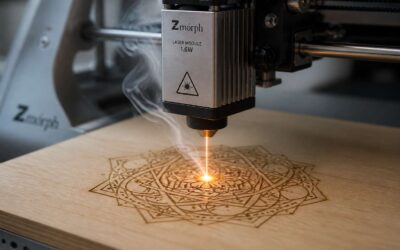
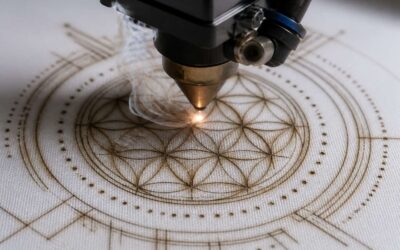
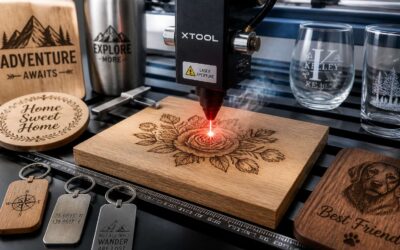
Essentials include a capable power range, precise focus, and a bed large enough for ambitious projects. I value a laser’s wavelength—shorter wavelengths bite finer lines; robust ventilation and a safe enclosure keep my studio running smoothly while I push creative boundaries. Software compatibility also shapes flow, with SVG and DXF well supported.
- Pinpoint precision and kerf control for fine detail
- Material versatility: wood, acrylic, leather, coated metals
- Raster and vector modes with grayscale engraving
CNC machine essentials and scope
In South Africa’s workshop yards, a well-tuned CNC is a patient artist, carving order from chaos. When you weigh laser engraver vs cnc, the CNC route shines on harder materials, parts that demand repeatable precision and batch production that stays faithful from first cut to last. A robust spindle, rigid gantry, and dust-control keep tolerances tight as your ideas mature, while the hum of servo drives and shavings become a cadence.
Key CNC essentials include:
- Rigid frame and high-precision linear rails for minimal flex
- A powerful, enclosed spindle and a well-tuned drive system
- Effective dust collection and a safe, tidy enclosure
- CAM software compatibility and reliable G-code interpretation
- Adequate bed size and work-area for ambitious pieces
Scope spans 3-axis workflows with 2D pocketing, and 4-axis options for rotary work. A spectrum of materials—wood, plastics, light metals—fits SA studios seeking repeatable finishes and steady throughput.
Performance comparison and key differences
A recent SA workshop survey shows 62% of makers weigh repeatable accuracy over raw speed, a truth that sharpens the debate around laser engraver vs cnc. The laser shines with fine detail, crisp engraving, and rapid runs on wood, acrylic, and coated surfaces, but heat and kerf cap its depth and material personality. The CNC, by contrast, trades nimbleness for brute‑force stability—deeper cuts, tougher materials, and batch-ready precision that travels from first cut to last with unwavering steadiness!
- Material range and depth of cut
- Throughput and repeatable tolerances
- Setup time and ongoing maintenance
Ultimately, laser engraver vs cnc boils down to the project profile, tolerances, and workflow integration—do you need speed for short runs or stubborn materials for long, batch‑friendly production? In SA studios, this is less a binary choice and more a strategic pathway that expands capability and fuels craft.
Decision guide for choosing between laser and cnc
In South Africa’s workshop culture, a telling stat anchors the debate: 62% of makers prize repeatable accuracy over raw speed. That preference reshapes the question of laser engraver vs cnc. The laser offers fine detail and rapid runs on wood and acrylic, yet heat and kerf cap its depth; the CNC trades nimbleness for brute‑force stability, handling deeper cuts and tougher materials with batch‑ready poise.
Decision factors unfold across three axes: material range and kerf behavior, throughput and repeatable tolerances, and setup time plus ongoing maintenance.
- Material range and kerf behavior
- Throughput and repeatable tolerances
- Setup time and ongoing maintenance
Ultimately, the choice hinges on the project profile and workflow. The decision becomes a spectrum rather than a binary verdict, revealing a strategic pathway that suits South African studios and their distinctive production rhythms.

0 Comments